On this page
Moving dates rarely line up as neatly as the labels on the boxes. Your old broadband may stop before the removal van arrives, while the new service could start days after you collect the keys.
The easiest way to stay connected is to plan that gap separately from the permanent broadband move. Keep the fixed service transfer on track, then use a mobile connection for the days and addresses in between.
If the new service has missed a date confirmed in writing, check the possible amount with our broadband compensation calculator. It also covers missed engineer appointments, and faults once you are up and running.
Plan the broadband move around three dates
Start before packing the router. Ask your broadband provider to confirm:
- the final service date at your current address;
- whether it can move your existing contract or needs to create a new order;
- the earliest activation date at the new address;
- whether an engineer needs access; and
- what to do with the provider's router and other equipment.
Ofcom's moving-home advice recommends checking whether your current network is available where you are moving and arranging the new start date in time. If your provider uses the Openreach network, Openreach's moving-home guidance explains why the connection type and existing equipment at the new property can affect setup.
Do not assume that taking the old router with you will transfer the service. The box in your hand is only one part of the connection. The broadband order must also be active at the new address.
Work out where the internet gap actually sits
Different moves create different gaps. Naming yours makes the temporary choice much easier.
A few hours on moving day
You may only need maps, messages, banking apps and access to utility accounts. Charge your phone, check its data allowance and use its hotspot if a laptop briefly needs to connect.
Several nights in temporary accommodation
A hotel, short let, family home or holiday rental may have WiFi, but do not build the move around a connection you have not checked. Portable WiFi can travel with your luggage and avoids asking every host for router details.
A delay after you reach the new home
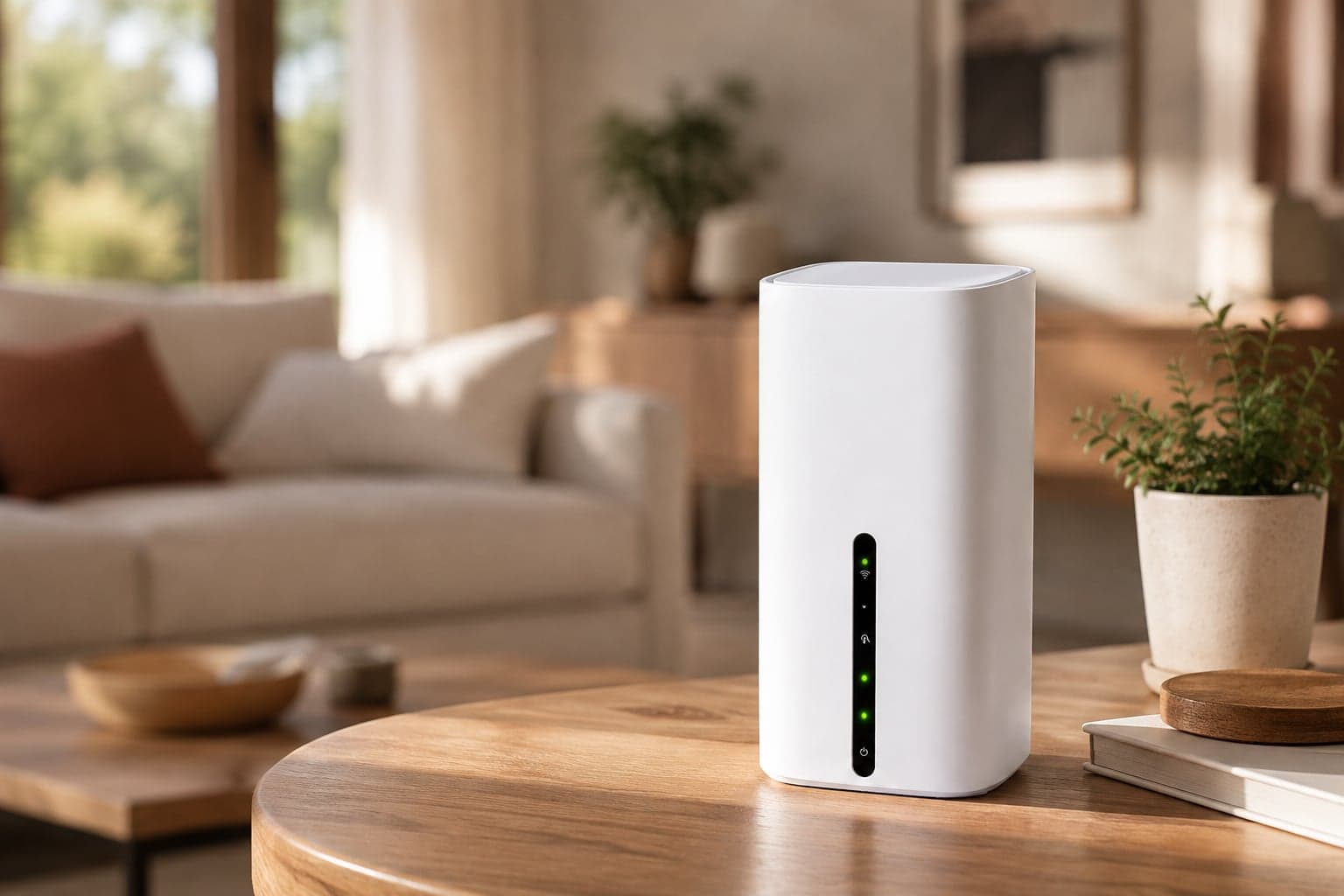
Once the household is staying in one place, think about how many people and devices need to connect. A portable device can suit a light setup. A plug-in Home Router may be more practical if the household needs a shared connection throughout the day.
This guide is about the logistics between addresses. If the property is a new build and the fixed connection itself is not ready, see the separate guide to getting internet in a new build before broadband is installed.
Choose temporary WiFi for the way you are moving
The right bridge is not automatically the largest or fastest option.
Phone hotspot
Best for a short gap, one person and a small number of essential tasks. It costs nothing extra if your existing data allowance is enough, but it ties the connection to your phone and can drain its battery on an already busy day.
Pocket WiFi
Best when the connection needs to move with you. It creates a personal WiFi network over the mobile network, so you can take it between addresses without moving a fixed line. It can also keep the household connection separate from your phone.
Temporary Home Router
Best after arrival when several people or devices need to share WiFi in one property. It plugs into mains power and is less suited to being used in the removal van, on a train or while carrying boxes between locations.
Check coverage at both homes
A mobile option is only useful where it receives a suitable signal. Check the old address, any temporary accommodation and the new home rather than looking at one postcode and hoping for the best.
Ofcom's mobile coverage checker compares predicted coverage from the main UK networks. The results are a guide because buildings, local obstructions and network demand can change what you experience indoors.
If you can visit the new property before moving, test a phone on the relevant network in more than one room. A weak result at one address does not mean the same device will struggle at the next.
Pack a small connected-move kit
Keep these items with you rather than at the bottom of a box:
- charged phones and a power bank;
- charging cables for each essential device;
- your broadband order number and provider contact details;
- moving company, estate agent or solicitor numbers;
- offline copies of directions and important documents; and
- the WiFi name and password for the temporary device.
Download large files, entertainment and maps before the old connection ends. Moving day is not the moment to discover that a laptop update needs several gigabytes.
Keep the temporary connection simple
When you arrive at each address, start with the tasks that matter. Connect phones and one work device first. Leave televisions, consoles and smart-home equipment until you know the connection is behaving as expected, because some devices begin updates as soon as they see WiFi.
Put a portable WiFi device somewhere open while it is in use, following its instructions. If the signal is weaker indoors, try a different room instead of hiding the device inside a bag or cupboard.
If your move involves working days, test email, calls and any company VPN before the first meeting. The more detailed remote-working guide can help you choose a setup for work rather than moving-day admin.
Let the rental follow the real move
Completion dates slip. Engineer dates move. Sometimes the keys arrive early, which is the rare moving-house surprise nobody minds.
A temporary internet connection should adapt without becoming another long commitment. No contract. Rent it for as long as you need it. Extend under the current rental terms if the move takes longer, or send it back when the new broadband is working.
Check the latest delivery and returns information before booking so you know where the device can be delivered and how the return works.
Stay connected without complicating the move
Treat permanent broadband and moving-day internet as two separate jobs. Arrange the long-term service as early as you can, then cover only the gap that remains. Our moving house WiFi page shows how to get a device delivered to your new address.
A phone hotspot is often enough for a few essential tasks. When you need WiFi across several addresses, a portable device gives the connection somewhere sensible to travel: with you, not in a box marked "miscellaneous".
Useful to know
Frequently asked questions
Need help?
Our UK support team is here seven days a week, 9am to 5pm.